If you think logo design is an easy process, that’s a complete misconception. To begin with, a logo is not merely some colors, fonts and fancy text put together. It is a brand’s identity, to the extent that, more often than not, a logo is more identifiable than the actual brand’s name!
If that is the case, how do you accomplish the creation of an effective logo? We shall attempt to answer this very question in this article.
The Logo Designer's Toolbox
Unlimited Downloads: 500,000+ Logo Templates, Print Templates, PSD Templates and Design Assets.
Things to Consider When Designing a Logo
1. When Designing a Logo Make Sure It’s Simple
There are a million ways I can tell you this, but, again, let’s keep it simple: Be simple!
Point is, that a logo is not exactly a testing ground for your illustration and typography skills. It is more a test of your design insight and presentation sense. Let us look at the logo of Nike for that matter:
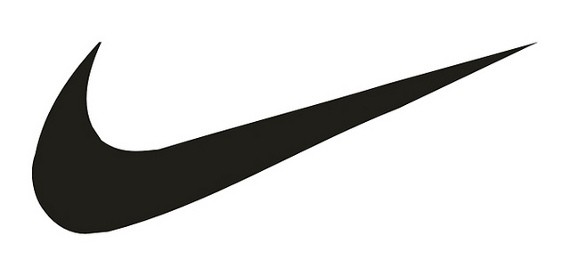
Most of the time, the logo doesn’t even require a caption or the brand’s name. But we know it is Nike the moment we look at it! They can use it on sign boards and pamphlets, and even stop using their brand name altogether, we still will not be confused about the brand’s identity. That’s simplicity for you!
A complicated logo is not only difficult to identify, but also repeatedly fails in engaging the audience. A logo is an emblem, not a manifesto. Thus, it needs to be kept simple.
2. Make Your Logo Design Appeal To Different Audiences
Be it design, art or even writing, flexibility and adaptability go a long way in helping you succeed. To put it in other words, one needs to be dynamic and not static. Being rigid in logo design only leads to no scope for improvement and/or innovation, and when innovation dies, the design also dies.

A logo has to be dynamic. This does not mean that it has to change every week, but it should have a flexible approach. Companies expect their logo to appeal to a diverse spectrum of users. With such diversity, the audience is bound to have different types of tastes and preferences. A rigid logo means if you hate it, you hate it! That does not work in design.
3. Make Sure Your Logo Design Is Versatile
Being versatile goes a long way in making a logo design popular. If your logo is such that it looks great on posters, but horrible on coffee mugs, it will never achieve popularity.
Further more, if your logo is a slave to a color scheme, it cannot be called a good logo either — what this means is that a logo should look good even if it is displayed in black and white, or a set of colors that are not part of the original or actual design.
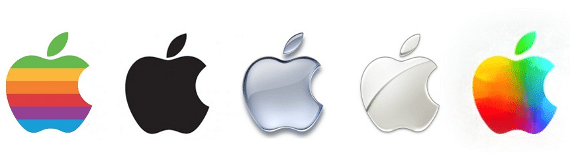
Take a look at Apple’s logo, for instance, that can look good irrespective of the color scheme. This is versatility in logo design portrayed at its very best!
4. Don’t Copy, Inspire – Design a Unique Logo
This is one of those oft-said but rarely followed tips. How does a logo rise to prominence as a brand’s identity? Simple! By being uniquely identifiable.
Again, let us turn to Apple’s logo. To put things into perspective, here is a simple, perfectly awesome, good to eat, chemical-free and absolutely healthy apple for you:

Seems tasty? Probably. Seems unique? Nope!
Now, let’s take a bite out of it and see what we get:

Ah………now that’s unique!
Literal interpretations apart, I think the point is clear. As you can see, a minor change has transformed an otherwise dull apple into one of the most iconic logo images today! This is how one achieves uniqueness: instead of trying too hard, the aim is to think out-of-the-box, and bring mundane objects into the mold of uniqueness.
To be frank, this is the real test of your creative abilities.
5. Make Sure Your Logo Design Has A Story To Tell
Every logo has a story to tell. If you view a logo as mere artwork or a pattern of lines and/or text, you will not be able to unravel the deeper meaning behind the logo. Ideally, a good logo has two stories to tell: one, the obvious one, and second, the hidden one.
Generally clients will come to you asking for a cool and mind-blowing logo. “Cool and mind-blowing” does not mean Superman here (though if your logo has superpowers, such as the ability to fly or prepare coffee, +5 points for that!).
Basically, if you can show your clients that the logo you have designed is not simply a shallow piece of artwork but consists of deep thinking and meticulous ideology, they’ll love it, even if it is something simple.
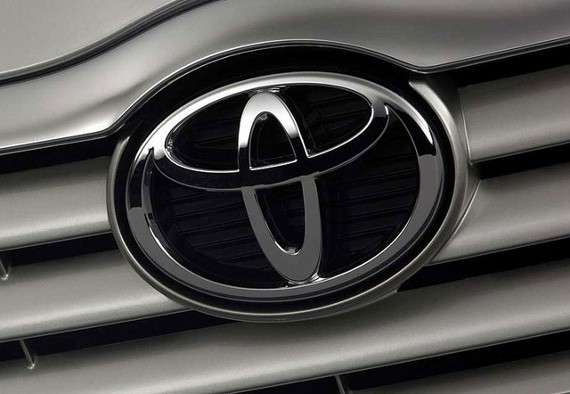
Talking about meaningful, let us take, for example, Toyota’s logo.
The logo is not simply three distinct ovals with a fancy ‘T’. According to Toyota, each of the three ovals has its own meaning; the center ovals (overlapping) represent the faith and trust between the company and its customers, whereas the outer (encircling) oval represents the global expansion plans of Toyota.
The negative space complements the encircling oval by expressing the infinite reach of the company and the overall logo, put together, represents a steering wheel which is, obviously, symbolic of cars.
Avoid These Mistakes When Designing a Logo
1. Do Not Underestimate Color In Your Logo Design
Colors form the essence of any visual representation. Often times, designers tend to overlook the importance of a judicious use of colors (this can probably be attributed to the misunderstood notion of ‘clean’ design wherein the only permissible color is the white space).
Pictured: Logo for eSettlement Solutions
Colors have the power to affect feelings and emotions. Ideally, your choice of color should be made on the basis of the target demographic of customers. Consider the age, gender and cultural orientations of the target audience, and couple it with your artistic creativity, and you’ve got a killer color palette for your logo already!
2. Do Not Over Innovate: Don’t Fall in the Cool Logo Creation Trap
This point works along with the “Be Simple” rule above. Innovation is a wonderful thing; you can work around, experiment, and come up with the killer idea for your logo. This is how artists work!
However, everything has its own share of limits. You innovation abilities definitely are limitless, but their practical usage is often a victim of the innovation possibilities that are provided by a given product. Excess experimentation can result in a logo that is gorgeous to look at, but is not identifiable with the company itself. Remember: a logo is not an art masterpiece.
Instead, your aim should be to make the logo both identifiable and easily associated with the brand. At the end of the day, your design should be something the customers can identify and the company can ‘own’. If you can accomplish that, your logo design is a success, irrespective of it being generic or innovative.
Take a look at Opera’s logo, for example. Just a red ‘O’, and people know that it belongs to Opera. Innovation lies here in the shape of the ‘O’: the flat-bulge (I wonder if that’s an acceptable word to describe it), and that’s it!
3. Don’t Underestimate Custom Typography In Your Logo Design
The first part, yes. But the second part, NO.
When it comes to logo design, your typeface should be unique. A custom hand-drawn typeface is way better than most gorgeous fonts anyway.
I know it! Nothing can match a gorgeous and drop-dead beautiful font, and since there are thousands of them out there, I just have to spend time choosing which one to use!
If nothing else, it keeps the design plagiarists at bay (because if it is not a custom typeface, once your font is discovered, your logo will be ripped within minutes). Thus, custom lettering should be the preferred way.
Plus, custom lettering is far more identifiable in a logo than a font that you purchased and/or downloaded off the internet. Remember Coca-Cola, anyone?
4. Do Not Be Predictable: Create Smart Logo Designs
Basically, make sure your logo is worth-watching (and, like I said above, tells a story). On first look, your logo should convey the brand’s identity. Nothing too loud though, such that if your logo is about a firm that makes umbrella, it shouldn’t shout out “RAIN”.
Thereafter, on a deeper look, your logo should also be suggestive of something: again, if talking about an umbrella firm, it should be suggestive of weather, but refrain from mentioning rain or sunlight (generally speaking, that is, as there isn’t a norm for this).
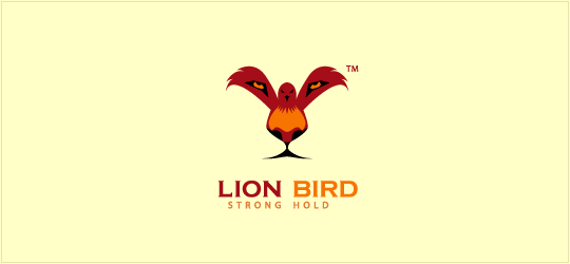
Let’s turn our attention to the Lion Bird logo. Look at it, and tell me what do you see on first look? A colorful bird, with the brand name, right? Now look closer. You’ll see that if you stare at the bird’s feet, a lion’s face is visible within the logo. Neat, eh?
5. Top Logo Design Tip: Don’t Fall For Cliche – Be Different
Quick, recall the number of logos you’ve seen that employ either Helvetica or Papyrus.
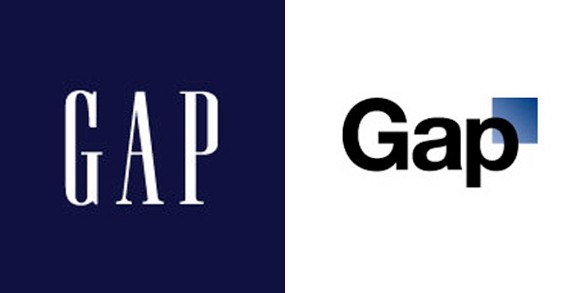
When it comes to logo design, it pays to be unique (already discussed the reasons in the first segment above). Logo design, just like any other variant of design, has its own share of trends which keep falling in favor and out of favor over time. It makes sense to steer clear of cliches and give your clients the unique logo that they expect from you.
This post may contain affiliate links. See our disclosure about affiliate links here.